📖 Lesson content
Summary
When building AI applications, you'll often encounter tasks that seem straightforward but become complex when you try to handle everything in a single request. Let's explore a workflow pattern that can help you break down complex tasks and get better results from Claude.
The Problem with Complex Single Requests
Imagine you're building a material designer application where users upload images of parts and get recommendations for the best material to use. Your first instinct might be to send the image to Claude with a simple prompt asking it to choose between metal, polymer, ceramic, composite, elastomer, or wood.
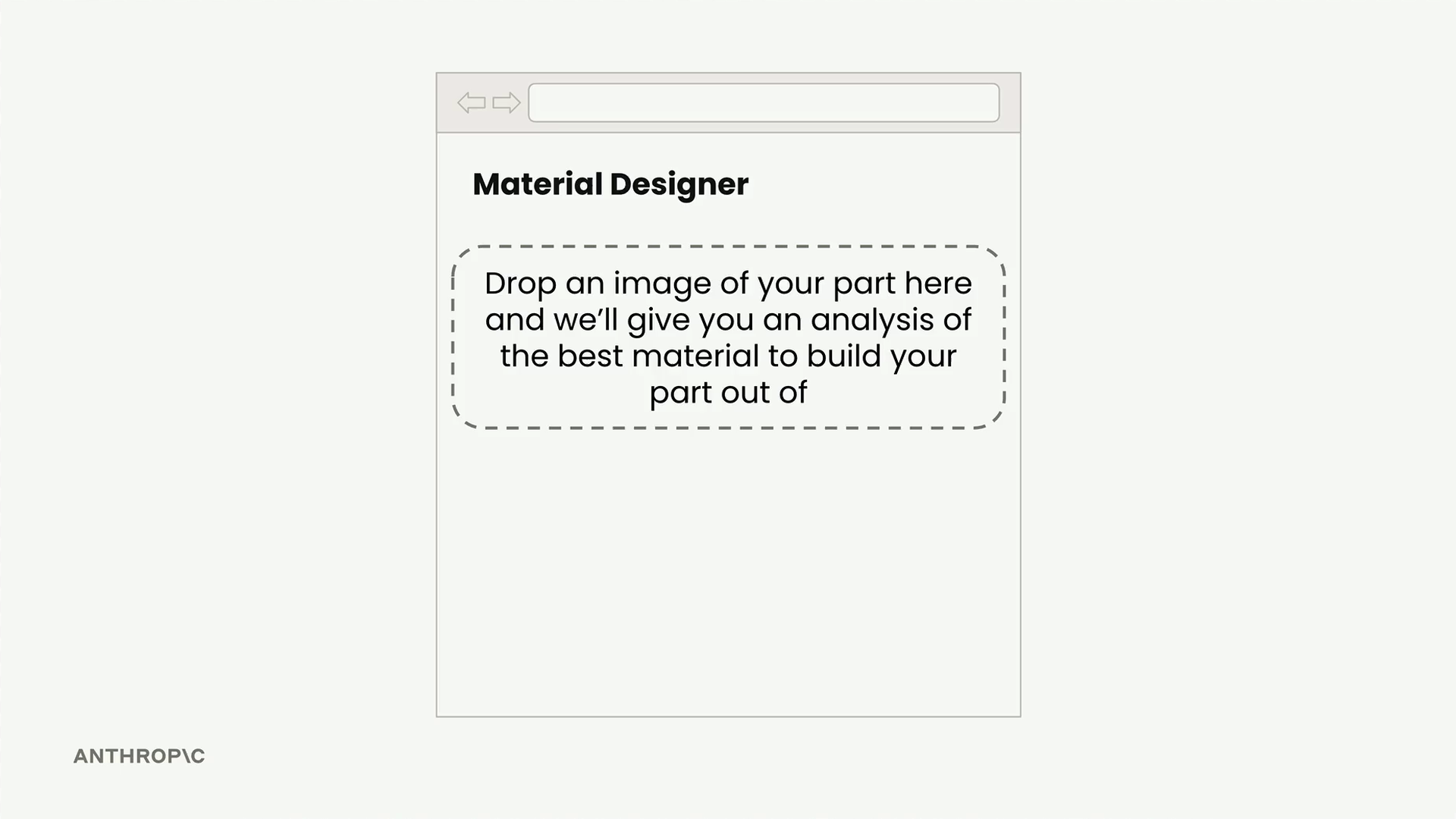
This basic approach might work, but you're asking Claude to do a lot of analysis without giving it proper guidance. A natural improvement would be to expand the prompt with detailed criteria for each material type.
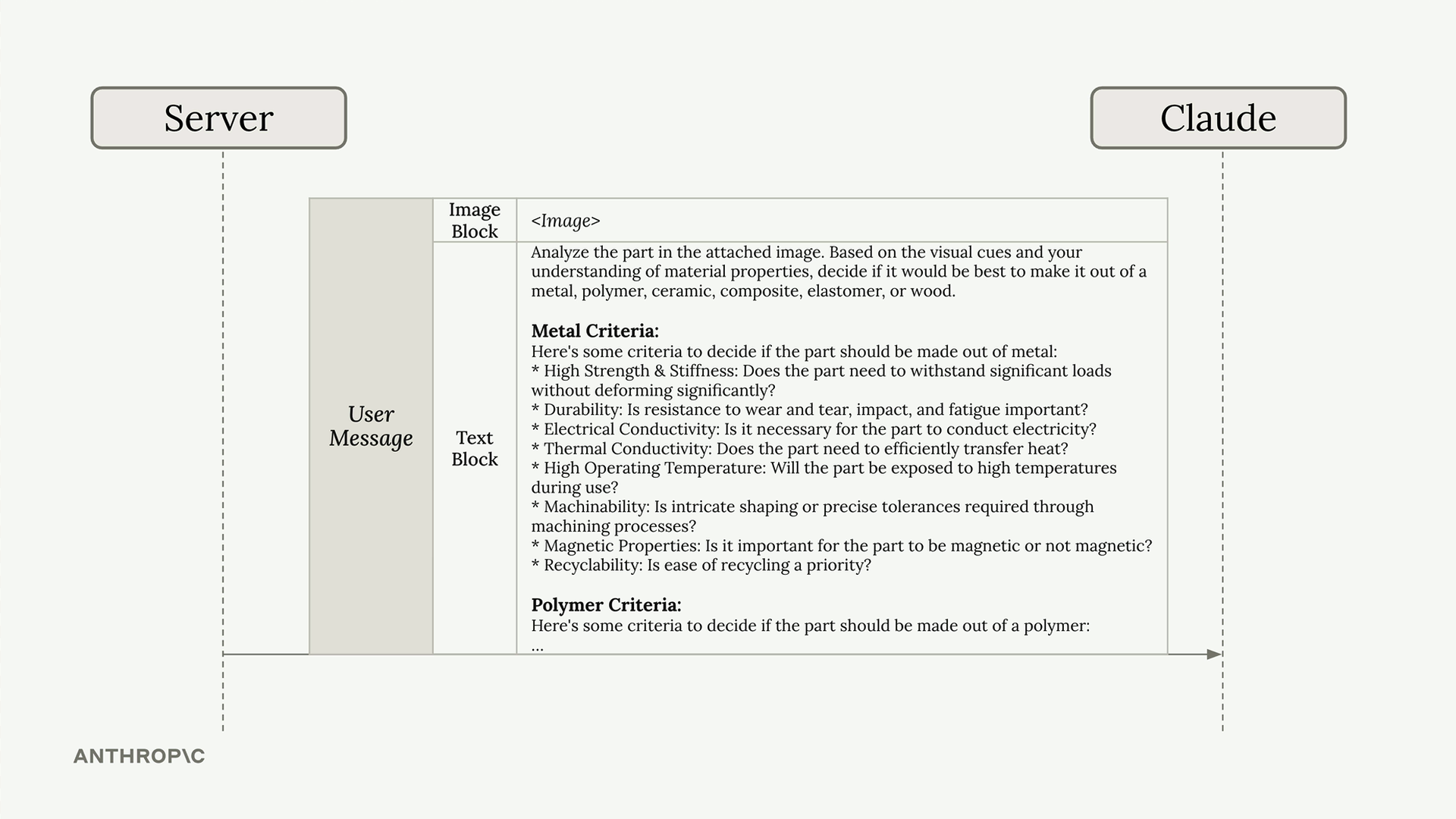
However, this creates a new problem: you end up with an enormous prompt that can confuse Claude because it has to juggle multiple complex analyses simultaneously. The model might get distracted trying to consider all the different pros and cons of each material at once.
A Better Approach: Parallelization
Instead of cramming everything into one request, you can split the task into multiple specialized requests that run in parallel. Here's how it works:
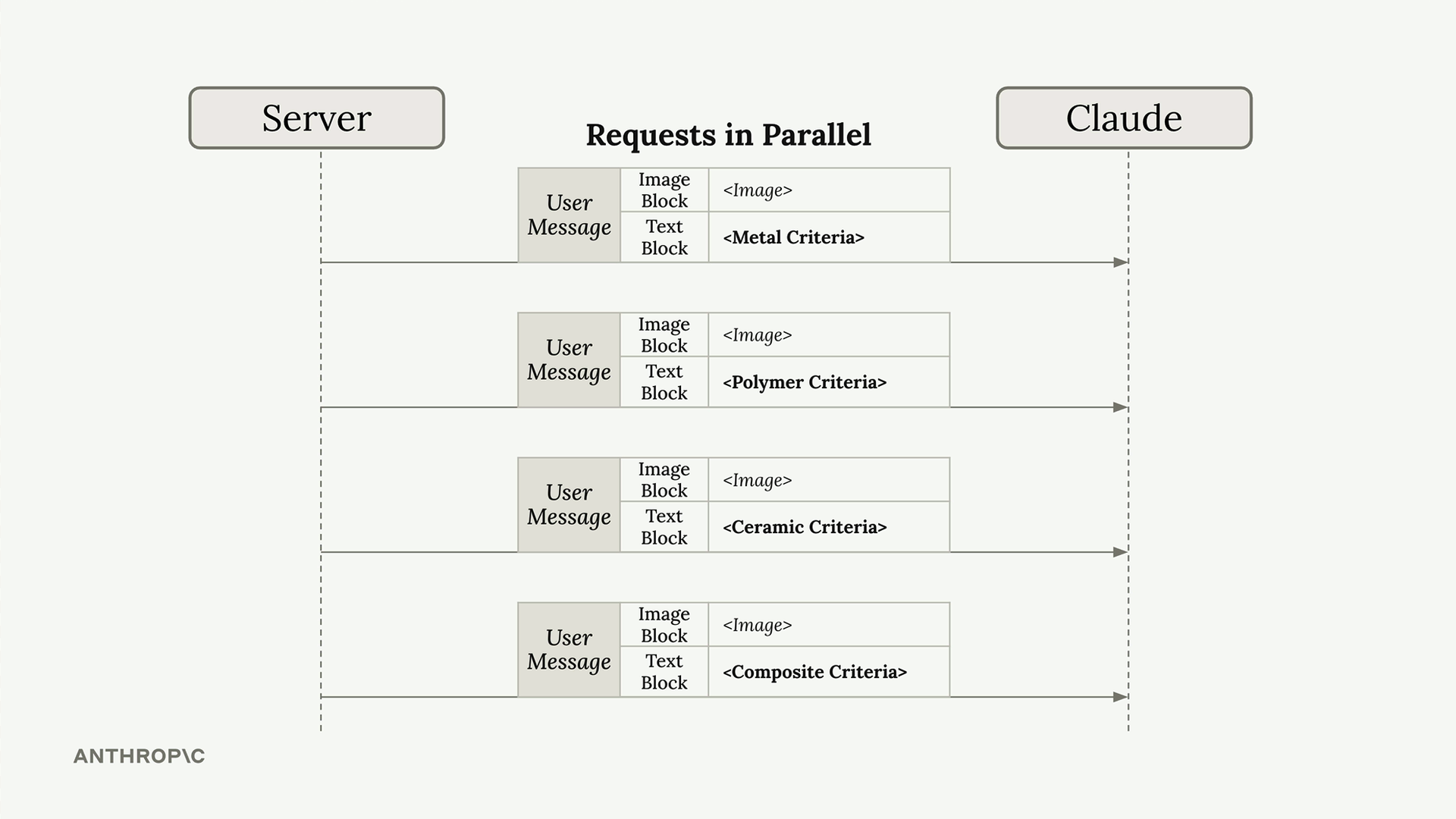
Send the same image to Claude multiple times, but with different specialized prompts. Each request focuses on evaluating the part for just one material type:
- One request analyzes suitability for metal
- Another evaluates polymer options
- A third considers ceramic materials
- And so on for each material type
Each prompt can be highly specialized for its specific material, including relevant criteria like strength requirements, temperature resistance, or manufacturing constraints.
Aggregating the Results
Once you receive all the individual analysis results, you make a final request to Claude that acts as an aggregator. This request takes all the specialized analyses and asks Claude to compare them and make a final recommendation.
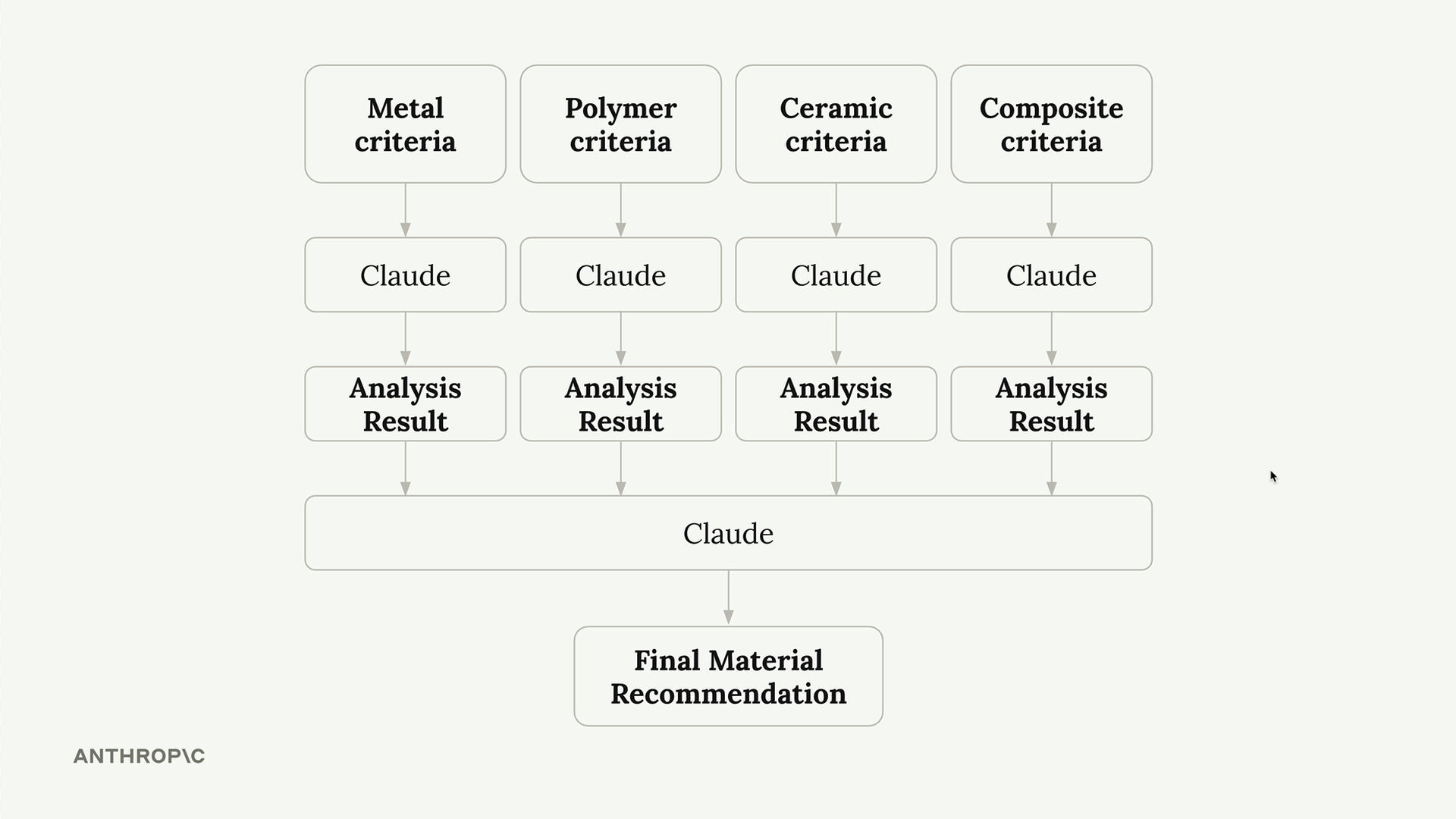
Now Claude doesn't need to worry about comparing materials from scratch. Instead, it can focus on evaluating the analysis results and identifying the most promising option based on the detailed evaluations you've already gathered.
The Parallelization Pattern
This approach follows a general pattern called parallelization workflow:
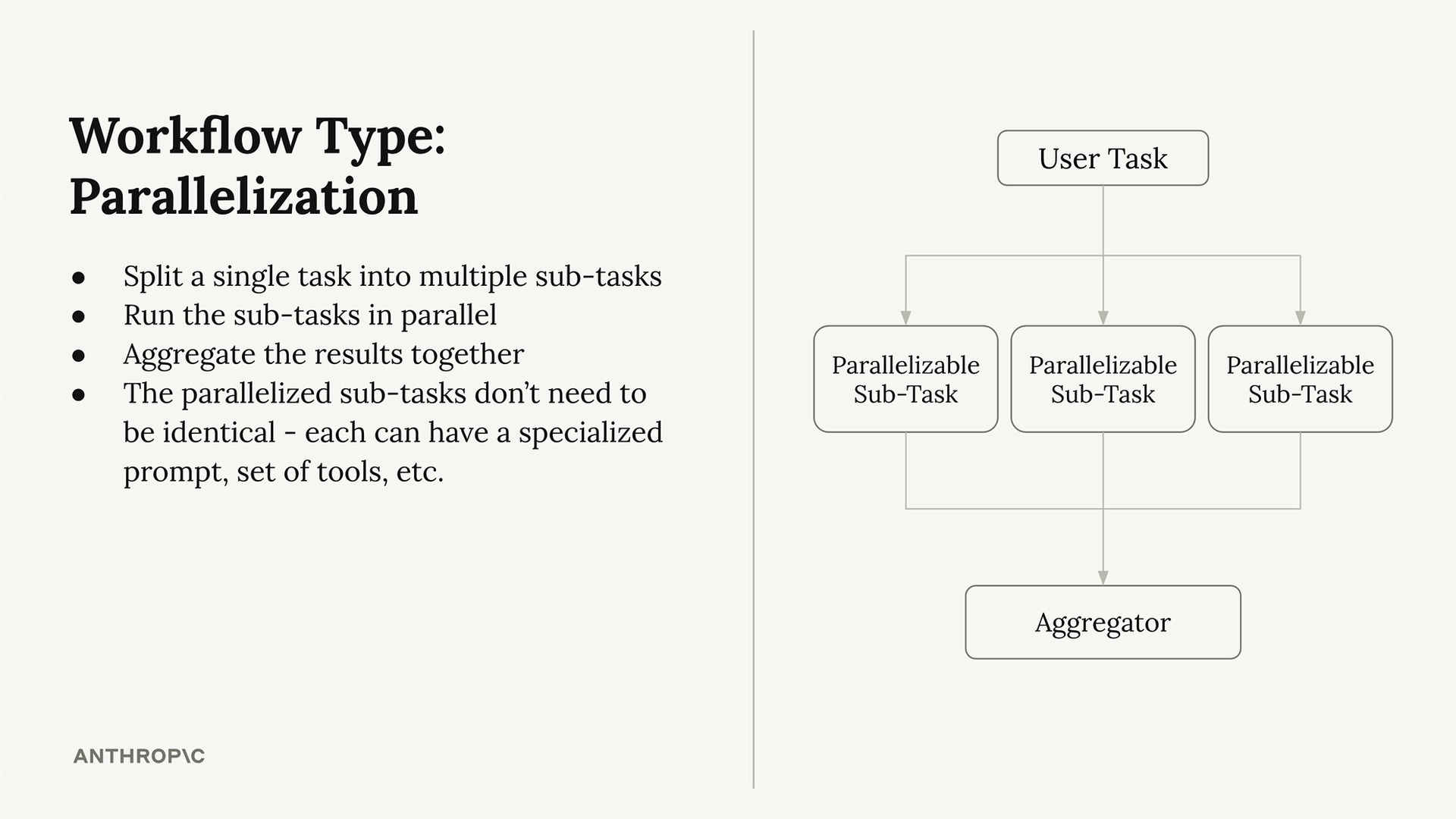
- Split a single complex task into multiple specialized sub-tasks
- Run the sub-tasks in parallel (simultaneously)
- Aggregate the results together in a final step
The key insight is that the parallelized sub-tasks don't need to be identical. Each can have a specialized prompt, different tools, or unique approaches tailored to its specific purpose.
Benefits of Parallelization
This workflow pattern offers several advantages:
- Focused attention: Claude can concentrate on one specific analysis at a time instead of juggling multiple complex considerations
- Easier optimization: You can improve and test the prompt for each sub-task independently
- Better scalability: Adding new material types or criteria doesn't complicate existing sub-tasks
- Faster execution: Since the sub-tasks run in parallel, the total time is often less than a sequential approach
When to Use This Pattern
Parallelization works well when you have a complex task that can be broken down into independent sub-problems. Look for situations where you're asking Claude to consider multiple options, perform several types of analysis, or handle different aspects of the same problem simultaneously.
The pattern is especially useful when each sub-task benefits from specialized prompting or when you want to ensure thorough coverage of different possibilities without overwhelming the model with too much complexity at once.
🔁 Related lessons
- Next: Chaining workflows
- Previous: Agents and workflows
- Same section: Making a request · Multi-turn conversations · Chat exercise
- Part of paths: Path C
- Reference docs: Glossary · Skills atlas · By use-case
📚 Source & attribution
- Original Anthropic Academy lesson: https://anthropic.skilljar.com/claude-with-google-vertex/289236
- © 2025 Anthropic. Educational fair-use only.