📖 Lesson content
Summary
StreamableHTTP is MCP's solution to a fundamental problem: some MCP functionality requires the server to make requests to the client, but HTTP makes this challenging. Let's explore how StreamableHTTP works around this limitation and when you might need to break that workaround.
The Core Problem
Some MCP features like sampling, notifications, and logging rely on the server initiating requests to the client. However, HTTP is designed for clients to make requests to servers, not the other way around. StreamableHTTP solves this with a clever workaround using Server-Sent Events (SSE).
How StreamableHTTP Works
The magic happens through a multi-step process that establishes persistent connections between client and server.
Initial Connection Setup
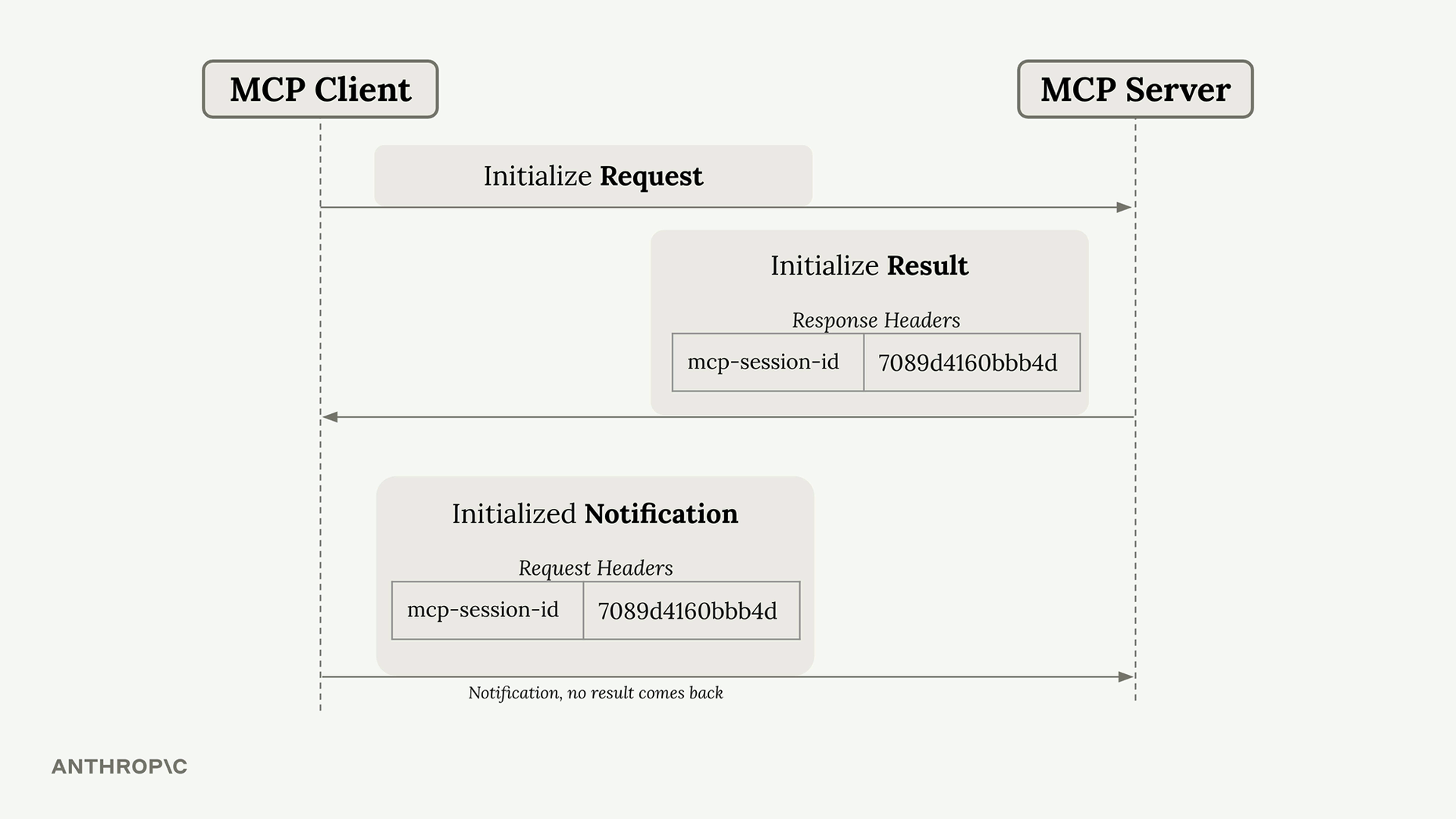
The process starts like any MCP connection:
- Client sends an
Initialize Requestto the server - Server responds with an
Initialize Resultthat includes a specialmcp-session-idheader - Client sends an
Initialized Notificationwith the session ID
This session ID is crucial - it uniquely identifies the client and must be included in all future requests.
The SSE Workaround
After initialization, the client can make a GET request to establish a Server-Sent Events connection. This creates a long-lived HTTP response that the server can use to stream messages back to the client at any time.
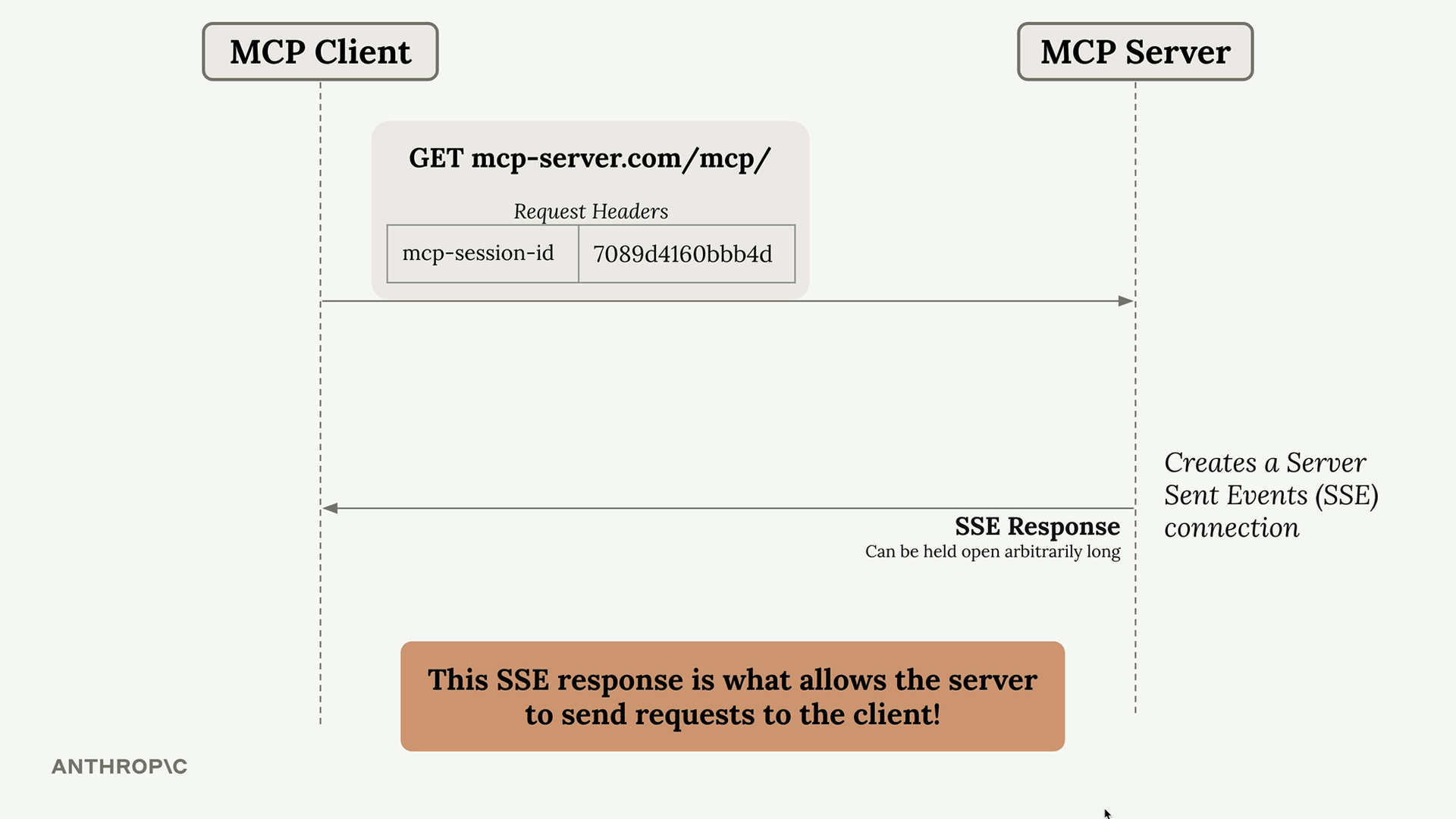
This SSE connection is the key to allowing server-to-client communication. The server can now send requests, notifications, and other messages through this persistent channel.
Tool Calls and Dual SSE Connections
When the client makes a tool call, things get more complex. The system creates two separate SSE connections:
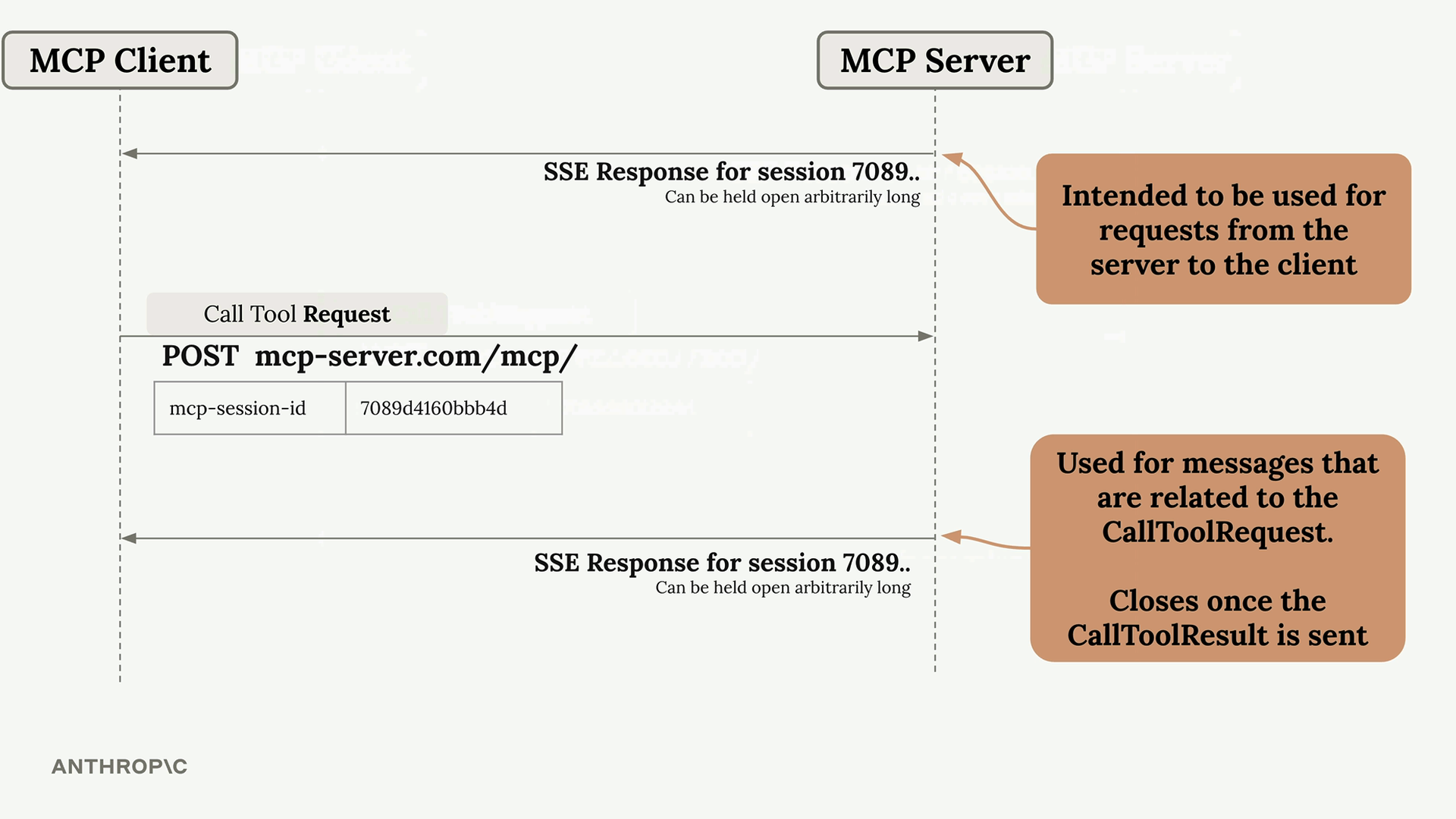
- Primary SSE Connection: Used for server-initiated requests and stays open indefinitely
- Tool-Specific SSE Connection: Created for each tool call and closes automatically when the tool result is sent
Message Routing
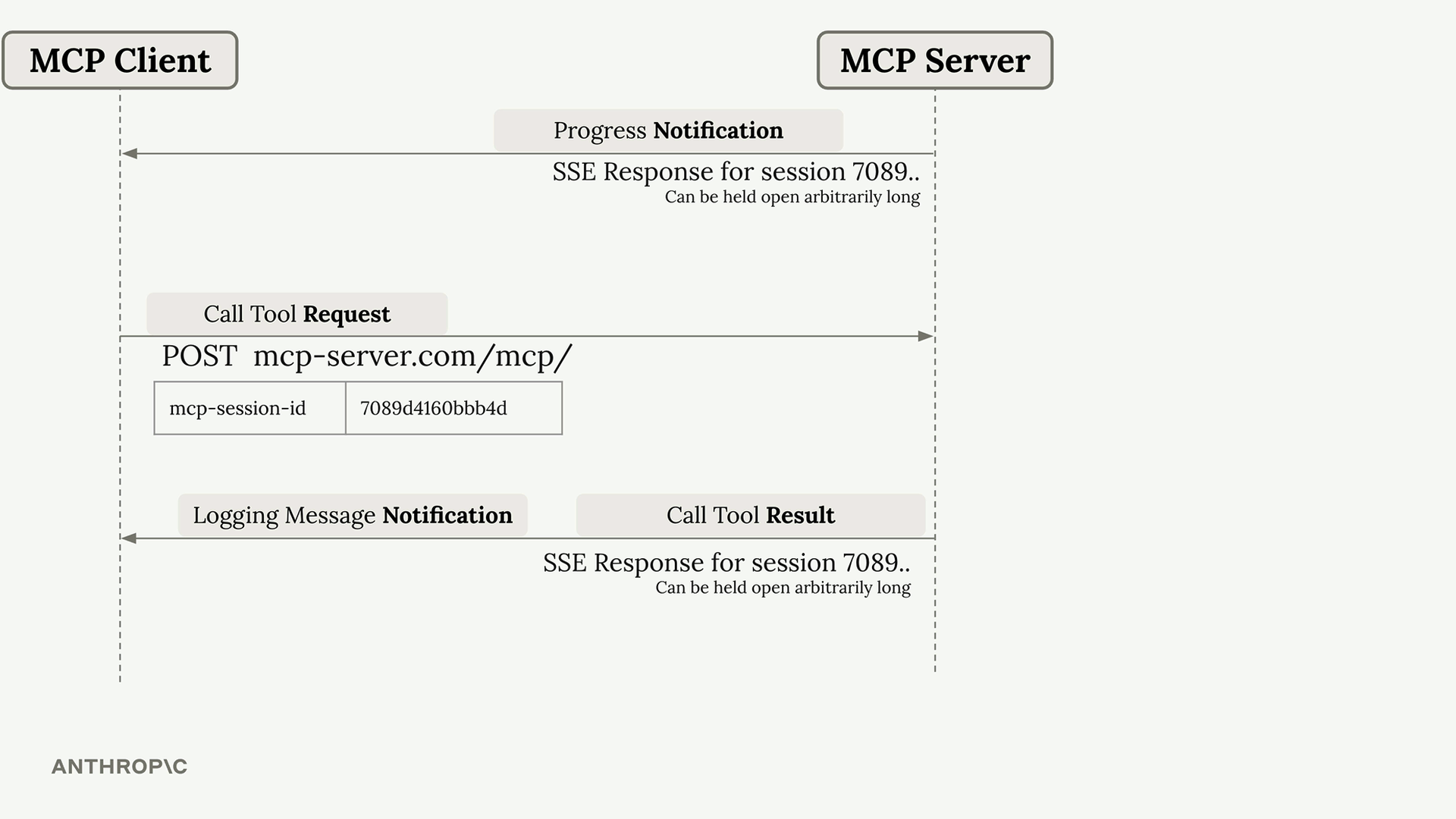
Different types of messages get routed through different connections:
- Progress notifications: Sent through the primary SSE connection
- Logging messages and tool results: Sent through the tool-specific SSE connection
Configuration Flags That Break the Workaround
StreamableHTTP includes two important configuration options:
stateless_httpjson_response
Setting these to True can break the SSE workaround mechanism. You might want to enable these flags in certain scenarios, but doing so limits the full MCP functionality that depends on server-to-client communication.