📖 Lesson content
Summary
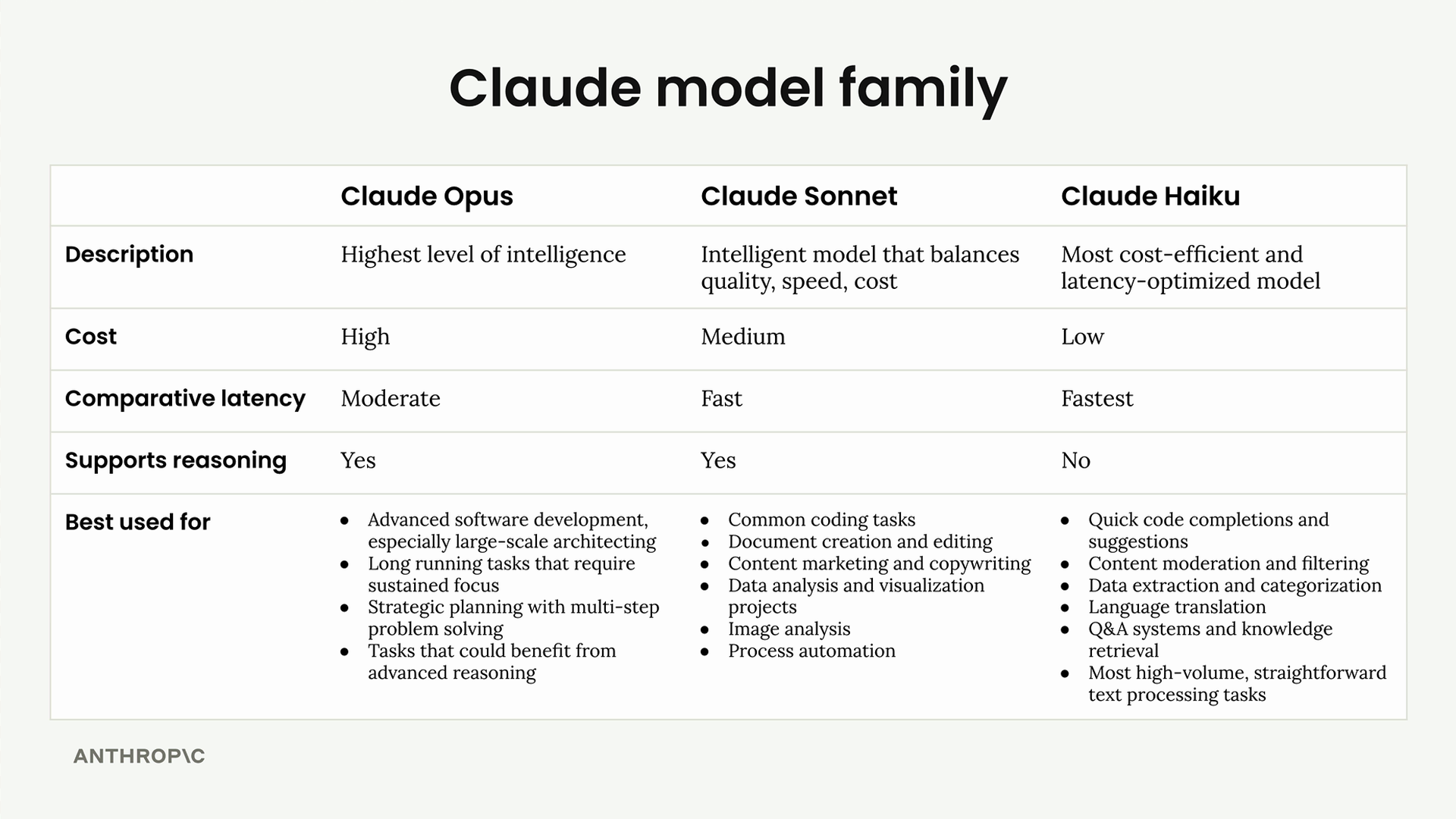
Claude offers three distinct model families, each optimized for different priorities. All three models share Claude's core capabilities - they can handle text generation, coding, image analysis, and other tasks. The key difference is how they balance intelligence, speed, and cost.
Claude Opus
Opus delivers Claude's highest level of intelligence. It's designed for complex scenarios that require sophisticated reasoning and planning capabilities.
Opus excels at working independently on complex projects for extended periods. It can manage multi-step processes and navigate different requirements without much human intervention. The model supports reasoning, meaning it can provide quick responses for simple tasks or spend time thinking through more complex problems.
The trade-off is moderate latency and higher cost. You're paying more and waiting longer for that extra intelligence.
Claude Sonnet
Sonnet sits in the sweet spot of Claude's lineup, offering a balanced combination of intelligence, speed, and cost that works well for most practical applications.
What makes Sonnet particularly valuable is its strong coding ability combined with fast text generation. Many developers appreciate its ability to make precise edits to complex codebases without breaking existing functionality.
Claude Haiku
Haiku is Claude's fastest model, built specifically for applications where response time is critical. It's optimized for speed and cost efficiency rather than maximum intelligence.
One important limitation: Haiku doesn't support the reasoning capabilities that Opus and Sonnet offer. This makes it ideal for user-facing applications that need real-time interactions but less suitable for complex problem-solving tasks.
Choosing the Right Model
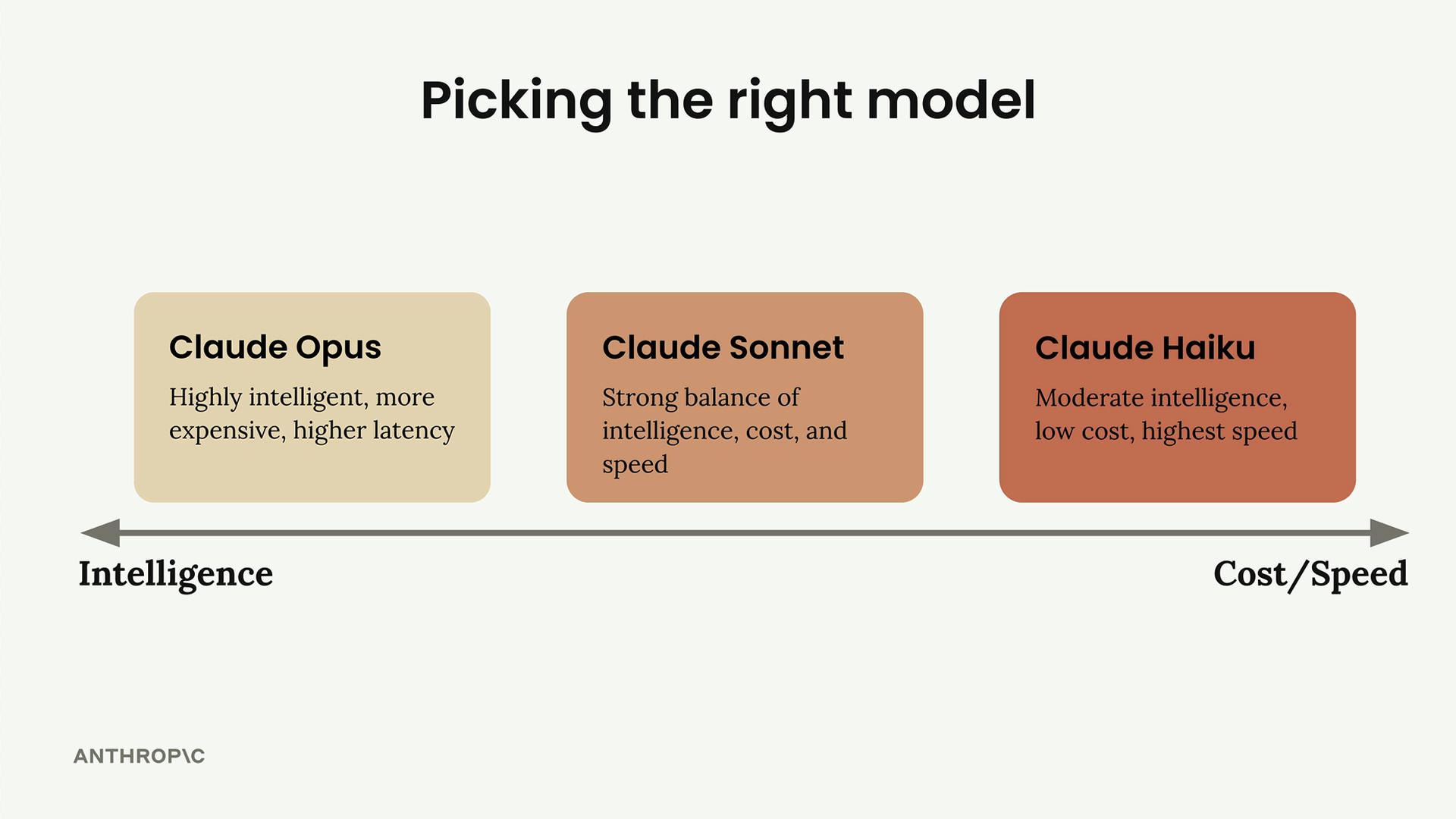
Model selection comes down to understanding the trade-offs between intelligence and cost/speed. Here's how to decide:
- Choose Opus when intelligence is your top priority. If you have complex tasks requiring strong reasoning capabilities, you're choosing quality over speed and cost.
- Choose Haiku when speed matters most. For real-time user interactions or high-volume processing where you need the fastest possible responses.
- Choose Sonnet when you need balance. Most applications benefit from Sonnet's combination of intelligence, speed, and reasonable cost.
Using Multiple Models
Many teams don't stick to just one model. Instead, they use different models for different parts of the same application:
- Haiku for user-facing interactions where speed is crucial
- Sonnet for main business logic
- Opus for complex tasks requiring deeper reasoning
This approach lets you optimize each part of your application for its specific requirements while managing overall costs and performance.
🔁 Related lessons
- Next: Accessing the API
- Previous: Introduction to the course
- Same section: Accessing the API · Making a request · Multi-Turn conversations
- Part of paths: Path C
- Reference docs: Glossary · Skills atlas · By use-case
📚 Source & attribution
- Original Anthropic Academy lesson: https://anthropic.skilljar.com/claude-in-amazon-bedrock/303332
- © 2025 Anthropic. Educational fair-use only.